ServicesMetal Roofing
Metal Roofing in Keystone Heights, Fastened for the Next Storm
If your shingles lose tabs every storm season, a metal roof can end that cycle. We install standing seam and exposed-fastener panels over fresh underlayment, fastened for the wind load your home faces. It starts with a free estimate and an honest answer on whether metal fits.
When Metal Makes Sense for Your Home
A metal roof is a long-term choice. Panels lock together or screw down in long runs, so there are far fewer edges for wind to catch than on a shingle roof. That matters most when you are tired of patching after every big blow and want the next roof to be the last one for a long while.
It is not the answer for every house or every budget. If your current roof has years left and only took a little storm damage, our roof repair or storm damage repair service may be the smarter move. We will say so plainly.
We have been roofing homes in this area since 1995, and we work as a licensed general contractor, so the permit, the decking repairs and the final inspection all stay with one crew instead of being handed off.
What a Metal Roof Install Includes
Tear-off and deck check
We remove the old roofing down to the wood and walk the decking. Soft or water-stained boards get replaced before anything new goes on, and we show you photos of what we found.
High-temperature underlayment
Metal gets hot in summer sun, so we use an underlayment rated for that heat. It is the second line of defense if wind-driven rain ever gets past a panel.
Panels and fastening
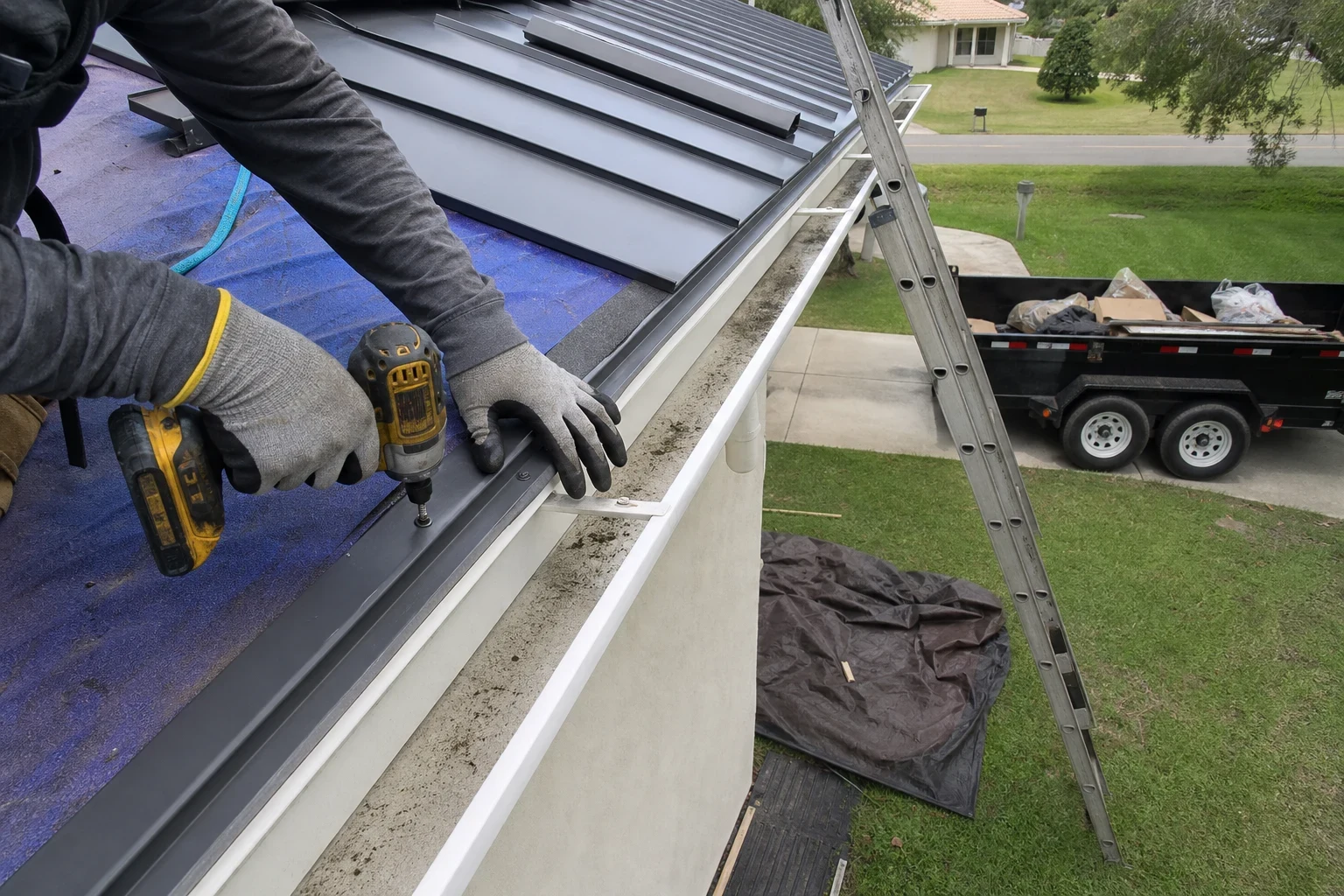
You can choose standing seam, where clips hide under the seams and let the metal expand and contract, or exposed-fastener panels like 5V crimp, which go on faster and cost less. Either way, fastener spacing follows the wind requirements for your home.
Trim, flashing and closures
Drip edge, ridge cap, foam closures and flashing at walls, vents and chimneys are where metal roofs succeed or leak. We bend and fit these pieces to your roof rather than forcing stock parts.
Permit, inspection and cleanup
We pull the permit, schedule the inspections and run a magnet sweep over the yard and driveway for stray screws and scraps.
Signs It May Be Time to Consider Metal
- Repeated storm repairs
- If you have paid for shingle repairs after more than one storm, the roof may be telling you it no longer holds well in wind.
- An aging shingle roof
- Curling, bald spots and granules in the gutters mean the shingles are near the end. Since you are replacing anyway, it is a good time to compare metal side by side.
- Lifted or creased tabs
- Shingles that flap in a breeze or show a crease line have lost their seal. One more strong storm can peel them off in sheets.
- Worn screws on an older metal roof
- On exposed-fastener roofs, the rubber washers dry out and crack over time. Rust streaks below the screws or drips along a panel run often trace back to this.
- Heavy pine debris
- Needles and limbs hold moisture against shingles. Smooth metal panels shed them more easily, especially on steeper pitches.
How a Metal Roof Job Runs
- 1
Free estimate and measurements
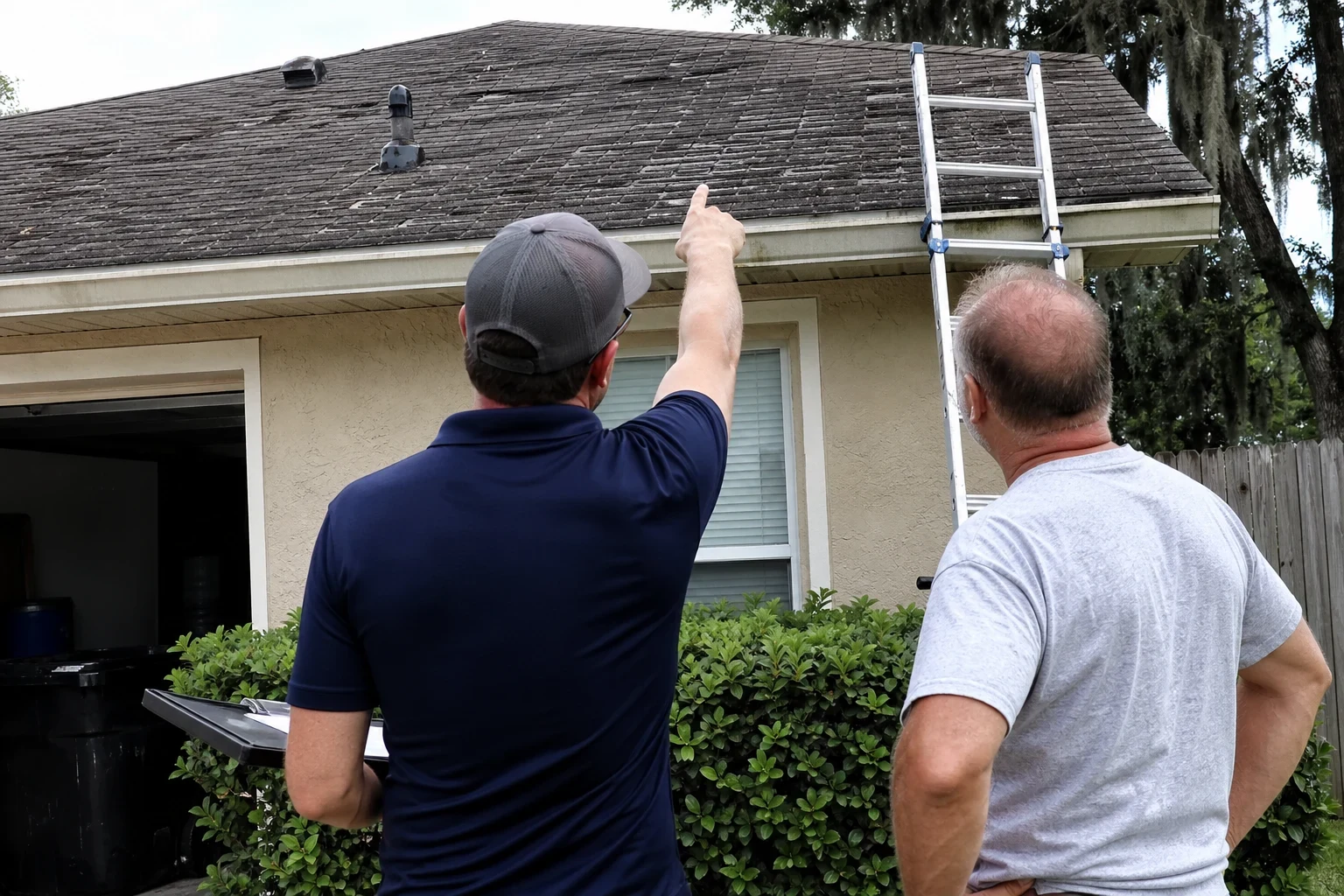
We look at the roof, the attic and the decking where we can, then measure for panel lengths. You get a written estimate that lists panel type, gauge, underlayment and trim so you can compare it fairly.
- 2
Ordering and permit
Metal panels are often cut to length for your roof, which takes some lead time. While they are made, we file the permit so the job can start once materials arrive.
- 3
Tear-off and dry-in
We strip the old roof in sections and lay new underlayment over each one before the crew moves on. If an afternoon thunderstorm builds, it finds a covered, dry deck rather than bare boards.
- 4
Panels, trim and inspection
Panels go on, then the ridge, flashing and closures. After the final inspection, we walk the finished roof with you and clean up the yard.
What Moves the Price of a Metal Roof
Metal costs more up front than shingles, and the gap depends on a few specific choices. We price each one separately in your estimate so nothing turns up later. Financing is available if you would rather spread the cost out.
- Panel system
- Standing seam takes more labor and trim than exposed-fastener panels. It also means no exposed screws to maintain down the road.
- Gauge and finish
- Thicker metal resists dents and flexing better. Painted finishes vary in how long they hold color in strong sun.
- Roof shape
- Valleys, hips, dormers and skylights each need custom-bent flashing. A simple gable roof goes much faster than a cut-up one.
- Decking condition
- We cannot see every board until the old roof comes off. If we find rot, we photograph it and explain the cost before replacing it.
Metal Roofing Questions We Hear
- Is a metal roof noisy during a downpour?
- Not the way most people expect. Because the panels sit on solid wood decking with underlayment between, rain sounds like a soft patter from inside. The drumming people picture comes from metal screwed straight to open rafters, like on a barn. Your attic insulation softens it even more.
- Will hail dent it?
- Large hail can leave dents, especially on thinner panels. Most dents are cosmetic and do not cause leaks. Choosing a heavier gauge lowers the risk if dents bother you.
- What warranty comes with the installation?
- Every metal roof we install comes with a 5-year workmanship warranty, which covers the way our crew put the roof on. We go over what that means before work begins, so you know where you stand from the first day.
- Can storm damage insurance help pay for a metal roof?
- If a storm damaged your current roof, your policy may pay to replace it with a comparable roof. We can meet your adjuster at the house, walk the roof together and hand over our photos and measurements so the damage is on record. Moving up to metal may leave a difference for you to cover, and we will put that number in writing before you decide.
- Can you put metal over my existing shingles?
- Sometimes code allows it, but we usually recommend a tear-off. Covering old shingles hides rotten decking and traps moisture. We will tell you what your roof allows and what we would do on our own house.
See If Metal Is Right for Your Roof
Tell us about your roof and we will come out, take measurements and set metal side by side with your other options in a written estimate. If a repair is the better call, we will tell you that too.